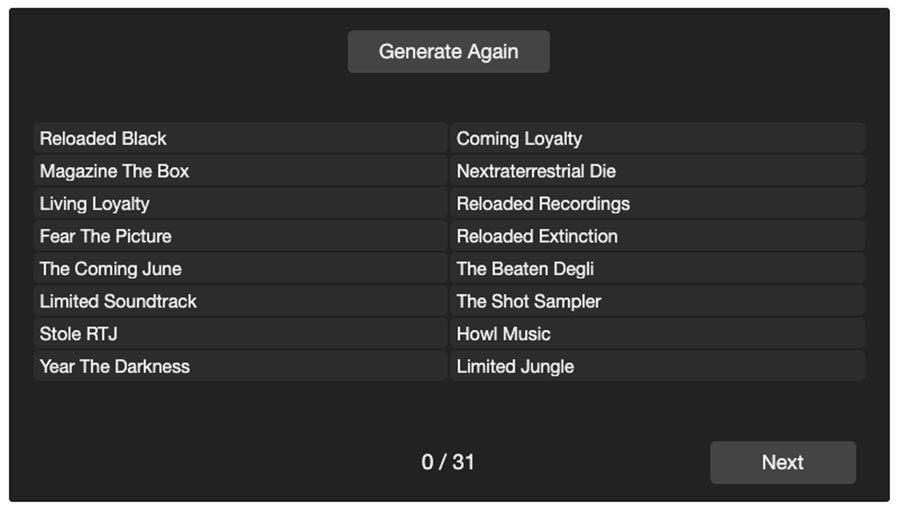
Naming a band is one of the most crucial, yet often agonizing, steps in a music group's journey. It’s more than just a label; it’s your identity, your battle cry, and the first impression you make on the world. This is where Top Online Music Group Name Generators & Tools become your secret weapon, transforming what could be a months-long headache into a creative sprint. Forget staring blankly at a whiteboard or endless, unproductive band meetings. These digital tools are designed to ignite inspiration and help you forge a name that not only sounds killer but also strategically positions your unique sound for success.
At a Glance: Naming Your Band for Success
- Your name is your brand: It defines your sound, unites members, and rallies fans.
- Collaboration is key: Get input from all band members.
- Think strategically: Consider your genre, image, and future evolution.
- Test it out loud: Ensure the name sounds great when announced.
- Do your homework: Check domain, social media, and trademark availability early.
- Avoid legal pitfalls: Don't pick names too similar to established acts.
- Generators are your friend: Use online tools to spark ideas, overcome blocks, and refine options.
- Random vs. AI: Understand the different modes generators offer for varied results.
- Trust the process: Shortlist, vote, and test your top choices in real-world scenarios.
Why Your Band's Name is More Than Just a Label
Imagine stepping onto a stage, the crowd roars, and the announcer bellows your band's name. Does it resonate? Does it thrill? Does it capture the very essence of your music? A truly great band name does all of this and more. It acts as a unifying force for band members, solidifies your sound in the minds of listeners, galvanizes your fanbase, and encapsulates your entire musical mission. It’s your sonic signature, painted in words.
Consider the legends. The Beatles, for example, combined a musical term with a playful insect pun, creating something instantly memorable and unique. Queen is a single, powerful word that suggests majesty and grandiosity, perfectly mirroring their theatrical rock. Then there are the Arctic Monkeys, a quirky, creative concept that evokes a distinct image, or Radiohead, an abstract and poetic choice that hints at deeper meaning. From the raw power of Metallica to the grunge anthem of Nirvana, these names aren't accidental; they're iconic because they fit, they stick, and they become synonymous with a sound and an era.
The right name can catapult you into the public consciousness; the wrong one can lead to confusion, obscurity, or even legal woes. This isn't a decision to be taken lightly, but it also shouldn't be a source of endless dread.
The Naming Gauntlet: Common Challenges Musicians Face
Every band, from garage newbies to seasoned pros, has likely wrestled with the monumental task of naming themselves. It’s a creative process fraught with specific hurdles:
Creative Blocks & Decision Fatigue
You've got the riffs, the lyrics, the chemistry – everything but a name. Staring at a blank page, trying to conjure the perfect moniker, can be utterly paralyzing. You might cycle through hundreds of ideas, none of them quite right, leading to exhaustion and frustration. This is particularly common when you're trying to appeal to multiple band members, each with their own vision and preferences. The sheer volume of possibilities can be overwhelming, leading to decision fatigue where no option feels truly "the one."
The "Already Taken" Syndrome
You finally land on a name that sparks joy, makes sense, and just feels right. Then, a quick Google search reveals it's already the name of a death metal band from Norway, a niche folk duo from Canada, or worse, a globally recognized pop sensation. This heartbreak is a common rite of passage for aspiring groups. Checking domain names, social media handles, and trademark databases only to find your brilliant idea is already claimed can be a major demotivator. It underscores the need for originality and thorough due diligence.
Genre Confusion & Image Misalignment
A band name should ideally give a listener a hint of what to expect. A hard rock band named "Sparkle & Sunshine" might confuse potential fans, while a folk band called "Skullcrusher" would certainly misrepresent their sound. Choosing a name that clashes with your musical genre or desired image can lead to misdirected marketing efforts and a struggle to connect with your target audience. You want your name to act as an open invitation, not a misguiding signpost.
Navigating the Naming Process: A Strategic Approach
Overcoming these challenges requires a structured, yet creative, approach. It's about blending artistic vision with practical considerations.
Step 1: Gather the Troops (and Their Ideas)
Your band name needs to represent everyone. The first crucial step is to involve all band members in the brainstorming process.
- Initial Brainstorming Session: Start with an open discussion. What themes resonate with your music? What emotions do you want to evoke? Are there inside jokes, places, or obscure references that hold meaning for the group? Encourage everyone to bring a list of their top 5-10 favorite names, no matter how wild or conventional. The goal here is quantity, not immediate quality. Don't critique yet; just collect.
Step 2: Define Your Vibe (Genre, Image, and Sound)
Understanding your musical identity is paramount. Your name should be an extension of your artistic core.
- Genre-Specific Naming Playbook: Different genres often lean into distinct naming conventions.
- Rock/Alternative: Often powerful, dynamic. Many use "The" (The Killers, The Strokes), animal names (Wolfmother), or abstract concepts (Radiohead, Foo Fighters).
- Metal/Hardcore: Intense, dramatic, often drawing from mythology, darkness, or aggression (Slayer, Iron Maiden, Sepultura). Names convey strength and raw power.
- Indie/Alternative: Quirky, poetic, sometimes ironic. Two-word combinations are common, often creating a unique imagery (Arctic Monkeys, Phoenix, Bon Iver).
- Pop/Rock: Catchy, memorable, often with a feel-good or relatable vibe. Aim for radio-friendly names that roll off the tongue (Maroon 5, Coldplay, Imagine Dragons).
- DJs/Electronic: Futuristic, tech-inspired, sometimes abstract or cryptic (Daft Punk, Deadmau5, Skrillex).
- Folk/Acoustic: Earthy, nostalgic, often referencing nature, places, or traditional elements (Fleet Foxes, The Lumineers, Mumford & Sons). When you're thinking about understanding your musical genre, remember that your name is a powerful signal.
- The "The" Question: Classic vs. Modern Identity: Should you use "The"? Adding "The" to your name (e.g., The Doors, The Rolling Stones) lends a classic, established feel. It implies a certain gravitas and tradition. However, it's certainly not mandatory, and many modern bands intentionally omit it for simplicity, better SEO (as "The" can be dropped in searches), and a more contemporary edge. Ultimately, the decision should come down to how the name sounds when announced on stage and how it fits your band's overall aesthetic. If it sounds clunky, ditch it. If it adds gravitas, embrace it.
Step 3: The Litmus Test: Sound, Sight, and Recall
Once you have a shortlist, put those names through a rigorous evaluation.
- Say It Out Loud: The Announcer Test: Imagine a concert announcer introducing your band. Does the name flow? Is it easy to pronounce? Does it have a good rhythm? A name that looks good on paper but sounds awkward when spoken won't cut it on stage or radio.
- Visual Appeal & Logo Potential: Close your eyes and visualize it. What kind of imagery does it conjure? Could it be translated into a compelling logo or album art? A strong visual identity can significantly enhance your brand. As you think about this, keep in mind the potential for crafting a memorable band logo that complements your chosen name.
- Memorability & Pronunciation: Is it easy to remember after hearing it once or twice? Is it easy to spell? Avoid overly complex or obscure spellings that might confuse fans trying to find you online.
Unleashing Creativity: Top Online Music Group Name Generators & Tools
This is where technology truly shines. When you hit that creative wall, or need a fresh perspective, online band name generators are an invaluable resource. They're designed to break you out of your naming rut and provide a torrent of ideas you might never have considered.
How These Tools Work Their Magic
At their core, these generators leverage algorithms and databases of words, phrases, and concepts to produce unique combinations. They typically offer two main modes:
- Random Mode: This is the most common and often 100% free with unlimited generations. No sign-up is required; you simply click a button and it instantly combines creative elements to generate unique names. It’s excellent for sheer volume of ideas, acting as a rapid-fire brainstorming partner.
- AI Mode: Increasingly sophisticated, AI-powered generators usually require credits per generation (or a subscription). They analyze user keywords, genre preferences, and stylistic inputs to create smarter, more personalized, and contextually relevant names. Think of it as having a digital marketing strategist and wordsmith rolled into one, tailoring suggestions based on a deeper understanding of your band's profile.
The steps to use them are straightforward:
- Input Key Information: Start by telling the generator about your band. What's your genre? Who are your influences? Are there specific themes, moods, or keywords that define your music? The more detail you provide, especially for AI modes, the more relevant the suggestions.
- Refine Your Search: Adjust parameters like desired word length, stylistic preferences (e.g., "edgy," "whimsical," "epic"), uniqueness levels (how common or obscure you want the words to be), and specific word combinations you're looking for.
- Examine the Generated List: Scroll through the names. Don't dismiss anything too quickly. If nothing quite hits the mark, tweak your inputs or advanced options and regenerate. Iteration is key.
- Choose the Best Fit: Select the names that best represent your musical vision and style.
- Share and Collaborate: Present your favorite options to your bandmates for feedback and discussion.
Benefits of Using a Generator:
- Generates Millions of Ideas: No human can come up with the sheer volume of name combinations these tools can. They provide an endless wellspring of inspiration.
- Tailors to Specific Music Styles: Many generators allow you to specify genre (rock, pop, jazz, metal, indie, electronic, folk, acoustic), ensuring suggestions are more aligned with your sound.
- Helps Ensure Uniqueness: While not a substitute for proper legal checks, many generators incorporate databases to flag names that are common or already used, helping you avoid immediate conflicts. This early uniqueness check can save you a lot of time and potential heartbreak.
- Overcomes Creative Blocks: When you're stuck, a generator acts as a powerful catalyst, kickstarting your imagination and introducing new word associations you might not have considered.
Ready to explore endless possibilities? Don't let a naming block hold you back. Generate your band name and unlock your band's potential identity today!
A Step-by-Step Guide to Using a Band Name Generator Effectively
To maximize the utility of these tools, approach them systematically.
- Input Your Core Information:
- Genre: Be specific (e.g., "symphonic metal," "dream pop," "alt-country").
- Influences: Name a few bands you admire or whose style you emulate.
- Themes/Keywords: What are your songs about? Love, protest, fantasy, everyday life? List words associated with your band's aesthetic and lyrical content. This is especially vital for AI modes to deliver relevant results.
- Refine Your Search Parameters:
- Word Length: Do you prefer short, punchy names (e.g., "Rush," "Kiss") or longer, more descriptive ones (e.g., "Twenty One Pilots")?
- Style: Are you aiming for something "serious," "humorous," "futuristic," "vintage," "abstract," or "concrete"?
- Uniqueness Level: Some generators let you toggle how common or obscure the word choices are.
- Word Combinations: Do you want single words, two-word phrases, or more complex structures?
- Explore and Iterate:
- Don't just generate once and give up. Tweak your inputs slightly, try different keywords, and experiment with various style options.
- Keep a running list of names that intrigue you, even if they're not perfect. You might find a gem hiding in a list of duds, or a part of a name that can be combined with another idea.
- Shortlist and Test:
- Once you have a substantial list of potential names, share them with your bandmates.
- Vote on the top 10, then the top 5.
- Test these favorites out loud. Write them down. Imagine them on a concert poster. This collaborative step is essential for building consensus and ensuring everyone feels invested in the chosen name. Effective collaboration on band names ensures a name everyone loves.
- Secure Your Identity: The Crucial Checks:
- Beyond the Generator: Essential Due Diligence. A generator might give you unique suggestions, but you are responsible for the final checks. This step is non-negotiable before committing to a name.
- Domain Availability: Can you get a
.com(or other relevant TLD) for your band?yourbandname.comis critical for your online presence. - Social Media Handles: Check platforms like Instagram, Twitter, Facebook, and TikTok. Are your preferred handles (
@yourbandname) available? Consistent branding across platforms is key to leveraging social media platforms effectively. - Trademark Search: This is paramount. A quick search on your national patent and trademark office website (e.g., USPTO in the US) can reveal if a similar name is already protected in the music industry. Ignoring this step can lead to costly legal battles and the devastating need to rebrand down the line. To learn more about protecting your band's identity, thorough trademark research is your first line of defense.
- Google Search: Perform a comprehensive search for your top names. Look for bands, businesses, or products with similar names, especially those in the entertainment or music sphere. You want to avoid any confusion for fans and steer clear of any existing negative associations.
Advanced Naming Strategies & Pitfalls to Avoid
Beyond the immediate generation, there are deeper considerations to ensure your name stands the test of time.
- Versatility is Key: Evolving with Your Sound: Don't choose a name that's too genre-specific if you anticipate your sound might evolve. A name like "Death Metal Thunder" is great if you're a death metal band forever, but if you pivot to acoustic folk in five years, it will be a major mismatch. Aim for a name that has enough flexibility to grow with your artistic journey.
- Avoiding Legal Headaches: Don't Copy, Don't Confuse: It bears repeating: never choose a name that's too close to a famous or established band. This isn't just about preventing legal action; it's about building your own identity. You want fans searching for you, not accidentally finding someone else. Confusion equals lost opportunities. Understanding how to avoid these issues is part of essential music marketing strategies.
- Future-Proofing Your Brand: Think Long-Term: Your band name isn't just for your first EP; it's for your entire career. Does it sound good for a debut album? What about your tenth? Does it resonate across different cultures if you plan to tour internationally? Consider the longevity and broad appeal of your chosen name.
- The Power of Story: A Name with a Narrative: While not essential, a name with an interesting backstory can be a powerful marketing tool. Did it come from a strange dream? A significant event? An inside joke? A compelling narrative behind your name can make it even more memorable and endearing to fans. It connects with people on a deeper level than just a catchy phrase. This can even spark ideas for unlocking songwriting inspiration.
Making the Final Decision: Consensus and Confidence
The goal is a name that everyone in the band feels good about, that represents your music accurately, and that is legally viable.
- The Voting Process: Fair & Effective: Once you have a shortlist of vetted names, implement a structured voting system. Each member gets a certain number of votes (e.g., 3 votes), which they can distribute among their favorite options. Discuss the results openly, focusing on the strengths of the top contenders. Sometimes, the name that receives the most votes isn't the final choice, but it helps narrow down the field.
- Testing in the Real World: Rehearsals & Gigs: Try out your top 2-3 names informally. Use them in rehearsals. If you're playing a small, informal gig, introduce yourselves with one of the names. How does it feel? How do people react? Does it roll off the tongue during introductions? This practical testing can often solidify a choice or reveal unexpected issues.
Ready to Find Your Sound's Signature?
Choosing a band name is a significant milestone, a declaration of your artistic intent to the world. It’s a process that demands creativity, collaboration, and a healthy dose of practicality. While it can feel daunting, the advent of sophisticated online music group name generators and tools has democratized this process, empowering every musician to find a name that is not only unique but also resonant and powerful.
Don't let the blank page win. Embrace the digital age, leverage these powerful tools, and embark on the exciting journey of defining your band's legendary identity. Your perfect name is waiting to be discovered, ready to rally your fans and embody every note you play.